
Lesson 20 of 25 · 10 min
Cold water, heat and first aid
Survive a fall into cold water, spot heat illness and hypothermia, and handle the injuries anglers get.
20.1
Florida water is colder than it looks
Warm air fools people. In winter, Florida water is much colder than the air feels.
- Average January water, from NOAA: Apalachicola about 55°F, Pensacola 57°F, Clearwater 62°F, St. Petersburg 65°F, Key West 72.5°F.
- Cold fronts bring cold air that chills water near shore faster than water offshore.
- Springs stay near 72°F all year. After a hot summer day, jumping in can still make you gasp.
The gasp can start in water as warm as 77°F. Check the water temperature, not just the forecast high.
Dress for the water, not the air.
20.2
The first minutes in the water
Lesson 8 taught the 1-10-1 rule. Here's what to do with it.
- Gasping (the first minute, sometimes longer): keep your head up and get your breathing under control. Don't swim yet.
- Losing your grip (next 10 minutes or so): your hands, arms and legs stop working. Use this time to get out or onto the boat.
- Swim failure: without a life jacket, people often drown before hypothermia ever sets in. Swimming also drains heat. You may not make even half a mile.
Can you reach safety close by? Calm your breathing, then swim to it steadily. Can't reach it? Stay still, float, and wait for help.
The times are rough guides, not a countdown.
Float first. Breathe. Then decide.
20.3
HELP and huddle
Waiting in the water for rescue? Hold your heat in.
- Alone: the HELP position (Heat Escape Lessening Posture). Pull your knees up to your chest and keep your legs together. Press your arms to your sides, hugging your life jacket. Keep your head out of the water.
- With others: huddle. Face each other in a tight circle, arms around each other. You stay warmer, stay together, and make a bigger target to spot.
- Get as much of your body out of the water as you can. Climb onto a floating boat or cooler.
Both need a life jacket. That's why you wear it before you fall in.
Knees up, arms in, head out.
20.4
Hypothermia: spot it, warm them gently
Hypothermia is when the body's core drops below 95°F. It can happen in mild weather if someone is wet and in the wind.
Signs: shivering at first. Then confusion, a glassy stare, slow breathing, or shivering that stops. Those last signs need emergency help now.
What to do:
- Call for help: 911, or the Coast Guard on channel 16.
- Move them gently out of the wind and water.
- Take off wet clothes. Dry them, then wrap them in dry blankets or clothes.
- Warm the trunk first, not the hands and feet. Heat packs go on wrapped in cloth.
- Warm sips only if they're alert and can swallow. No alcohol, no caffeine.
Don't put them in a hot bath or shower. Warming too fast can upset the heart's rhythm.
Stopped shivering and confused? Call for help now.
20.5
Heat, sun and drinking water
Florida summers bring a different danger: heat.
- Heat exhaustion: heavy sweating, headache, nausea, dizziness, weakness. Get them into shade, cool them with wet cloths, and give sips of cool water. Head in and have them checked.
- Heat stroke: confusion, slurred speech, passing out or a seizure. The skin may be dry, or still soaked with sweat. This is an emergency. Call for help, get them in shade, and cool them fast with water, wet cloths and moving air.
- Drink water often, all day. Guidance for outdoor workers is about a cup every 15 to 20 minutes in the heat. Skip the alcohol.
- Sun: a brimmed hat, long sleeves, UV-blocking sunglasses, and SPF 15 or higher sunscreen. Reapply every 2 hours and after swimming. Water reflects the sun, even on cloudy days.
Confused in the heat? Treat it as heat stroke.
20.6
Call early: bleeding and lightning
Help is far away on the water. If an injury looks serious, call first, then treat. Split the jobs: one person treats, one calls on the radio, one drives the boat.
- Heavy bleeding (pooling or spurting): press hard right on the wound and keep pressing. If you're trained and it's an arm or leg, use a tourniquet. Blood soaks through? Add gauze on top. Don't pull the first pad off.
- Something stuck in the wound? Leave it in. Pad around it.
- Lightning strike: the person is safe to touch. Call MAYDAY or 911. If they're not breathing, start CPR and use an AED if you have one. Keep watching for more lightning. Storm safety is in Lesson 15.
Serious injury: one treats, one calls, one drives.
20.7
Hooks, spines and stings
- Fishhook in or near the eye: an emergency. Don't pull it. Cover the eye with a paper cup that doesn't touch the hook, and get to a doctor.
- Hook deep, or in a joint, or near an artery: leave it in and get medical help. Small hook just under the skin? Wash it well after it's out, cover it loosely, and watch for redness or swelling.
- Stingray, catfish or lionfish spine: get out of the water and press on any bleeding. Soak in hot water, about 104 to 113°F, for 30 to 90 minutes. Check the heat on unhurt skin. No ice. Get medical care.
- Jellyfish or man-of-war: don't rub. Lift off tentacles with a gloved hand or a tool, or rinse them off with seawater. Then soak in hot water for at least 20 minutes. Breathing trouble? Call for help.
- Any cut in salt or brackish water: wash it with soap and clean water, and cover it.
Wading the flats? Shuffle your feet so stingrays move off. Florida Poison Control: 1-800-222-1222.
Hook near the eye: don't pull it.
20.8
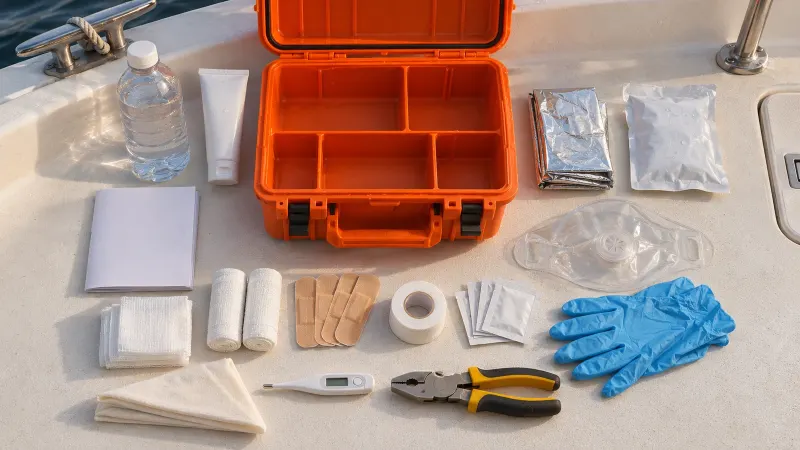
A first aid kit that lives on the boat
Keep a kit in a waterproof box everyone can find. Show it in your pre-trip briefing. The Red Cross list is a good start:
- Gauze pads, rolls and big absorbent dressings, bandages and tape
- Gloves and a CPR breathing barrier
- An emergency blanket and an instant cold pack
- Antiseptic wipes and antibiotic ointment
- A thermometer that isn't glass, and triangular bandages
- First aid instructions
For the boat, add:
- Everyone's own medicines and emergency phone numbers
- Sunscreen and plenty of drinking water
- Pliers with a wire cutter for hooks, and a disinfecting solution
Check it before the season. Replace anything used or past its date. A hands-on first aid and CPR class makes the kit far more useful.
Check the kit before you need it.
On the boat
Hook, spine or sting? Walk through it.
Help is far away on the water. If an injury looks serious, call first, then treat.
Step 1
What happened?
Wading the flats? Shuffle your feet so stingrays move off.
Your turn
8 decisions8 real situations. Decide first, then read why.
These come back for review later, because remembering on the water is what counts.
A day on the water
2 story tripsUse it on a whole day out.
Story trips from the morning forecast to the ride home. You make the calls; a bad one plays out so you see why the rule exists.
Sources
Checked 2026-11-05- 1NOAA NCEI: Coastal water temperature guide (monthly averages)Monthly average January water temperatures in Florida (the years averaged are not stated): Apalachicola 54.6°F, Pensacola 56.9°F, Mayport 58.3°F, Clearwater Beach 61.5°F, St. Petersburg 65.0°F, Fort Myers 66.5°F, Key West 72.5°FArchived monthly means; the guide was decommissioned May 5, 2025 and its data kept online. checked Nov 5, 2026
- 2NWS: Cold water hazardsCold shock can start in water as warm as 77°FWeb page, checked Oct 25, 2026
- 3NOAA NCEI: Coastal water temperature guide FAQWater near shore cools faster and follows cold air masses and upwelling; long immersion below 70°F can cause hypothermia even in summer; swimming increases heat loss and may limit you to less than half a mile; use the HELP position or huddleUndated web page, checked Nov 5, 2026
- 4USGS Scientific Investigations Report 2008-5023 (Raabe)Water from the Floridan aquifer, which feeds Florida's springs, stays about 22°C (72°F) all year and can contrast sharply with surrounding water in hot or cold weatherUSGS SIR 2008-5023 (abstract of oral presentation), checked Nov 5, 2026
- 5CDC NIOSH: Falls overboard (the 1-10-1 principle)1 minute of cold shock gasping; about 10 minutes before hands, arms and legs stop working and swim failure can follow; about an hour before hypothermia; victims without flotation drown after cold incapacitationPage reviewed Feb 26, 2024 (written for commercial fishing), checked Nov 5, 2026
- 6USCG: A Boater's Guide to the Federal RequirementsLoading, anchoring, fueling, float plans and checklistsRevised Nov 2023
- 7American Red Cross: HypothermiaSigns (shivering; confusion, glassy stare, loss of shivering, slow breathing need emergency care); call 911; dry clothes and blankets; wrapped heat packs; warm, non-caffeinated sips only if alert; never alcohol; can happen in mild weather when wet and windyUndated web page, checked Nov 5, 2026
- 8USCG Navigation Center: Radio information for boatersHow to make a MAYDAY call on VHF channel 16Undated web page, checked Oct 24, 2026
- 9CDC NIOSH: Heat-related illnessesHeat stroke: confusion, slurred speech, collapse, hot dry skin or heavy sweating; call 911 and cool fast with water, wet cloths and moving air. Heat exhaustion: headache, nausea, dizziness, weakness, heavy sweating; rest in shade, cool, sip cool water, get checkedPage dated Mar 3, 2026 (written for workers), checked Nov 5, 2026
- 10CDC NIOSH: Heat stress recommendations (hydration)For moderate activity in heat under 2 hours, about 1 cup (8 oz) of water every 15 to 20 minutes; sports drinks for hours of sweating; avoid alcohol; no more than 6 cups an hourPage dated Jul 16, 2026 (written for workers), checked Nov 5, 2026
- 11CDC: Sun safety factsShade, long sleeves, a wide-brim hat, UVA/UVB sunglasses, broad-spectrum sunscreen SPF 15 or higher reapplied every 2 hours and after swimming; UV reflects off water and reaches you on cloudy daysPage dated Jun 17, 2026, checked Nov 5, 2026
- 12American Red Cross: Life-threatening external bleedingCall 911; firm direct pressure; tourniquet for a limb if trained; don't remove the first soaked dressing; never pull out an embedded object, pad around itUndated web page, checked Nov 5, 2026
- 13NWS: How people are struck by lightningAny lightning strike can kill; calling 911, starting CPR and using an AED may be critical to keep a victim aliveUndated web page, checked Nov 5, 2026
- 14NWS: Lightning mythsA lightning victim carries no charge and is safe to touch for first aid; watch for more lightning and move to safetyUndated web page, checked Nov 5, 2026
- 15MedlinePlus: Fishhook removalDon't remove a hook that is deep, in a joint or tendon, or in or near an eye, eyelid or artery: get medical help. An eye hook is an emergency: protect the eye with a cup that doesn't touch the hook. Wash small wounds, use a loose dressing, keep tetanus shots up to dateReview date Oct 14, 2025 (U.S. National Library of Medicine; read via Internet Archive copy of Jul 30, 2026, checked Nov 5, 2026)
- 16MedlinePlus: StingrayGet medical help; leave the water, press on any bleeding, soak in water of 104 to 113°F for 30 to 90 minutes, then wash and cover; Poison Help 1-800-222-1222; a chest or belly puncture can killReview date Jul 1, 2025 (U.S. National Library of Medicine; read via Internet Archive copy of Aug 1, 2026, checked Nov 5, 2026)
- 17Florida Poison Control Centers: Aquatic toxinsFish spine stings (catfish, lionfish, stingray) are the most common water calls: soak in hot water about 110°F for 30 to 90 minutes, no ice; never rub a jellyfish sting or urinate on it; call 1-800-222-1222Undated web page, checked Nov 5, 2026
- 18American Red Cross: Jellyfish and marine life stingsRemove tentacles with a gloved or covered hand or a tool, flush with seawater if nothing else, then water as hot as tolerated for at least 20 minutes; stingray, urchin and spiny-fish stings: hot water soak and a tetanus check; call 911 for breathing trouble or shockUndated web page, checked Nov 5, 2026
- 19CDC: Preventing Vibrio infectionWith an open wound, stay out of salt or brackish water if you can, cover it with a waterproof bandage, and wash cuts right away with soap and clean running waterPage dated Jul 7, 2025, checked Nov 5, 2026
- 20UF/IFAS Extension St. Lucie County: The stingray shuffleFlorida extension educators recommend shuffling your feet when wading so stingrays move away; it is not 100% effectiveFeb 14, 2022 (University of Florida extension blog; prevention advice only), checked Nov 5, 2026
- 21American Red Cross: Make a first aid kitRecommended kit for a family of four (dressings, bandages, tape, gloves, breathing barrier, emergency blanket, cold pack, gauze, ointments, thermometer, instructions); add personal medicines and phone numbers; check it and replace used or expired itemsUndated web page, checked Nov 5, 2026
- 22ANSI/NASBLA 100-2022National standard for basic boating knowledge (Core)Effective Jun 1, 2022
Checked against these sources on November 5, 2026.
Free practice lessons, not an FWC-approved course: they don't issue the Florida Boating Safety Education ID Card. Covers national standard topics C4.3, C4.4, C7.2, C7.3.