
Vessel Dimensions and Measurements
Introduction
Beyond basic terminology, a boat's core dimensions have profound practical implications for navigation, docking, trailering, and legal compliance. Understanding these measurements is essential for safe, stress-free operation.
Length Overall (LOA) - Two Meanings
1. Regulatory LOA (for USCG Class): Hull length only, EXCLUDES outboards, swim platforms, bowsprits. Determines equipment requirements (Class A, 1, 2, 3).
2. Marina LOA (practical): Total physical length INCLUDING everything (outboards, platforms, etc.). What you pay for at marina.
Real-world: 25' registered boat may be 29' marina LOA. Know both!
Beam (Width)
Maximum width at widest point.
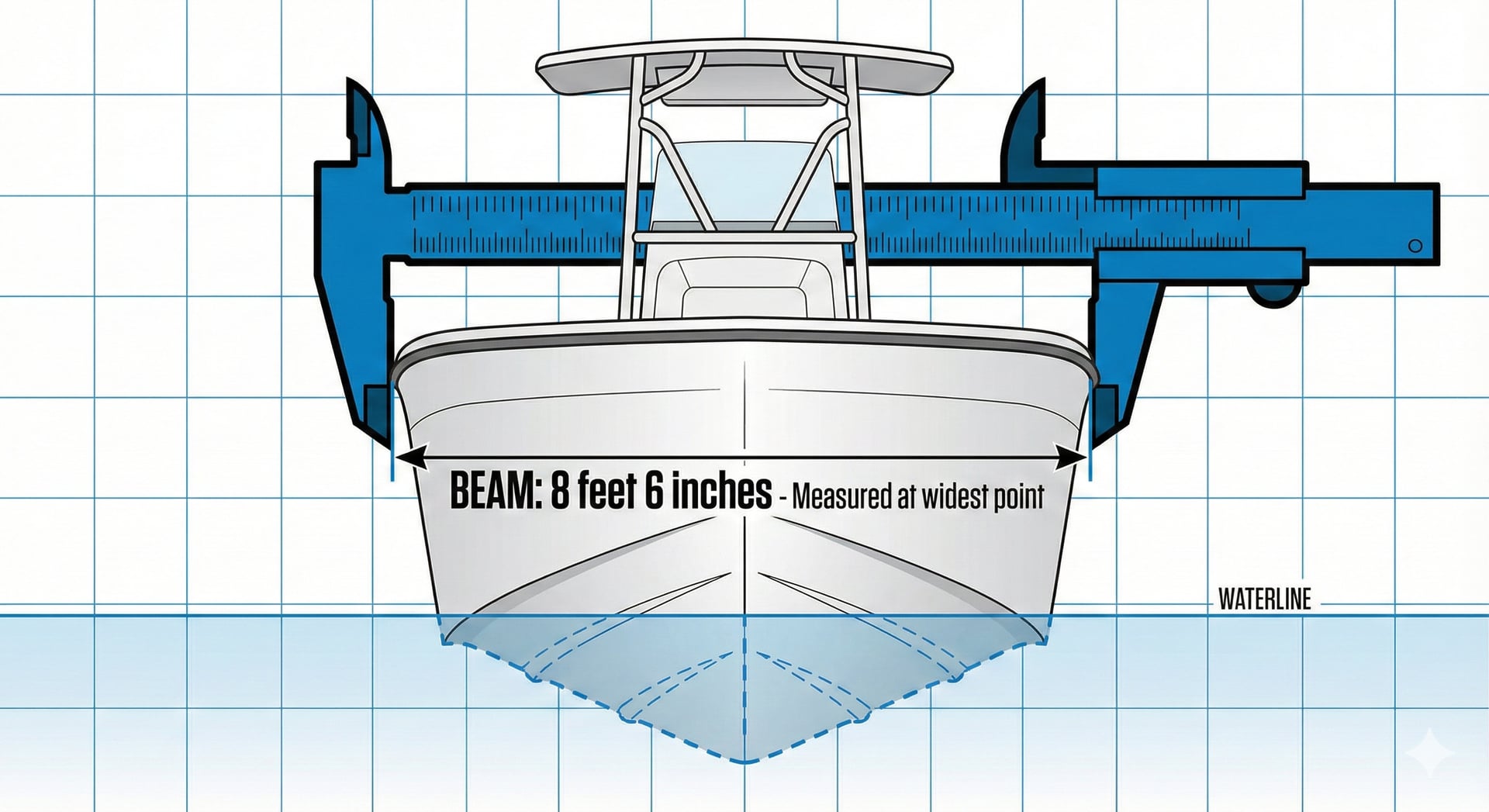
Critical: 8'6" Legal Trailering Limit: Most US states - boats wider than 8'6" beam need "wide load" permits, special hours, escort vehicles. This is why many "trailerable cruisers" are exactly 8'6" beam.
Draft (Depth Below Waterline)
Vertical distance from waterline to lowest point (keel/prop/outdrive). How much water boat NEEDS.

Critical for grounding prevention: Draft must always be less than water depth. Check tide tables - 6' deep at high tide may be 2' at low tide.
Types: Fixed draft (inboards/sailboats) vs Variable draft (outboards/sterndrives can trim up)
Squat Effect: At speed in shallow water, hydrodynamic pressure "squats" stern down, INCREASING draft. Can run aground at speed in same depth that was safe at idle.
Freeboard (Height Above Water)
Distance from waterline to gunwale (deck edge).

High freeboard: Keeps boat dry, prevents swamping. BUT creates "windage" - hull acts like sail, hard to dock in crosswind.
Low freeboard: Easy to control, less wind effect. BUT boat is "wet," easily swamped by wakes if overloaded.
Air Draft (Bridge Clearance)
Height from waterline to highest point (antenna/arch). Critical for bridges. Charts show bridge clearance at MHHW (Mean Higher High Water). Must calculate: Bridge height - Air draft = Clearance.