
Lesson 18 of 25 · 7 min
Float plans: tell someone
Leave a plan that gets a search started on time, and know what your person ashore should do.
18.1
What a float plan does, and what it doesn't
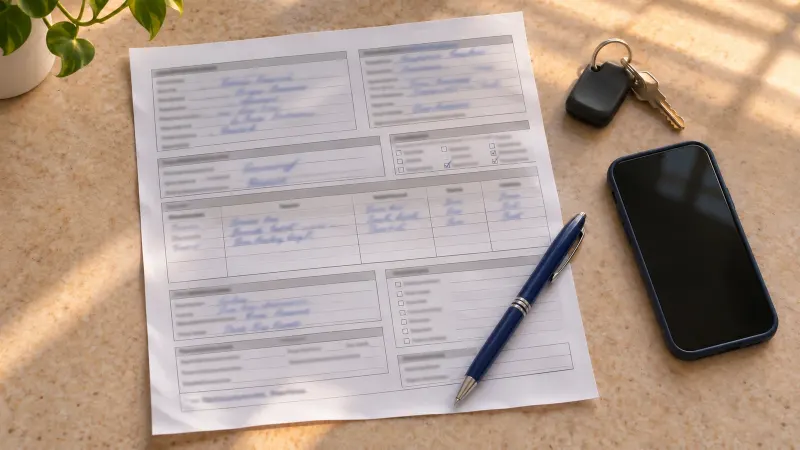
A float plan is a short written note about your trip. You leave it with a person ashore. If you don't come back on time, that person starts the search.
- Nobody tracks your boat for you. If you break down or capsize, no one knows until someone notices you're late.
- Don't file it with the Coast Guard. The official Coast Guard form says so in bold. It goes to a person you trust.
- Saving it in an app doesn't tell anyone. A plan helps only once a real person has it and knows what to do.
Lesson 3 put the float plan on your pre-trip list. This lesson shows how to do it well.
A plan only works if a person has it.
18.2
What goes in it
Write down what a rescuer would ask. The Coast Guard form covers:
- The boat: name, registration number, make, length, hull and trim colors, anything that stands out. Add a photo.
- How to reach you: cell number, VHF radio, the channel you'll listen to, and your DSC radio's MMSI number.
- Safety gear: life jackets, flares or other signals, and any EPIRB or PLB with its ID number.
- Who's aboard: names, ages, phone numbers, and medical needs.
- The trip: where you launch, where you're going, stops, and when you'll leave and be back.
- Your truck and trailer: make, plate number, and where it's parked.
Write what a searcher would need to spot you.
18.3
Pick the right person
Give the plan to someone reliable who will act. A spouse, a friend, a neighbor, or the marina office can work.
- Make sure they can be reached at the time you're due back. A person asleep with the phone off can't help.
- Name a backup. The Coast Guard form has room for two contacts.
- Confirm they have it. Ask them to say yes before you leave.
They don't need to know boats. They need to be able to read your plan aloud to a dispatcher.
Their yes before you leave, or it isn't a plan.
18.4
Set a definite "call for help" time
Give your person two times. One is when you expect to be back. The other is when to call for help if they haven't heard from you.
- Make it a clock time, not "this evening." For example: back by 4 PM; no word by 6 PM, call.
- Leave a little room for a slow ride home or a dead phone. Don't leave so much that help starts hours late.
- Cold water or a long run offshore? Time matters more. Pick an earlier call time.
Florida law sets a fixed limit for rental businesses. They must call law enforcement if a rented boat is more than 4 hours overdue for no good reason. Your own plan can and should be quicker.
Back by a time. Call by a time.
18.5
What your person does if you're late
Walk your person through this before you go. It follows the Coast Guard's Boating Emergency Guide.
- Try to reach you, then the other contact on the plan. Has anyone heard from you?
- Still worried at the call time? Call 911 or the Coast Guard. Say a boat is overdue. The dispatcher connects them with the agency that runs the search.
- Read the plan aloud: the boat, the people, where you went, when you were due.
- Don't guess. Wrong details can send searchers to the wrong place.
- Keep the phone free so rescuers can call back.
The form has a line for a rescue number. Write your nearest Coast Guard rescue center's number there. The Coast Guard lists them on its official "Contact USCG SAR" page.
In trouble yourself, right now? Don't wait for your plan. Call on VHF channel 16 or dial 911.
Late and no word: call 911 or the Coast Guard.
18.6
Keep it current, then close it
- Plans changed? If you head somewhere else or will be late, tell your person right away. A search in the wrong place wastes time.
- Check in at the times you promised, if you have signal.
- Back at the dock? Tell them you're safe. This is the step people forget.
- Already reported overdue? Tell every agency they called that you're back, so nobody keeps searching.
A search for someone sitting in their truck takes boats and aircraft away from people who need them.
Home safe? Close the plan.
18.7
Use our free tool, a text, or paper
- Our float plan tool walks you through the trip, boat, people and gear in five short screens. It's free with an account. You send a link to your person yourself. They open the plan and say yes or no to watching for you. While you're out, you can mark when you leave, check in, and say when you're back. You can also print it or send it as text.
- No account? Text your trip from your own phone: where you launched, who's aboard, and when to call for help.
- Paper works too. The Coast Guard form is free. Fill it in and leave it with your person.
Fishing Mobile doesn't alert anyone for you. It doesn't contact your person, the Coast Guard or any agency. Your person is the one who calls.
Saving a plan doesn't notify anyone.
Try it
Make a practice float plan, then see it from your person's side.
Practice only. Nothing you type here is saved or sent anywhere.
Give your person two times: when you expect to be back, and when to call for help if they haven't heard from you.
Step 1 of 4: Trip.
Your turn
7 decisions7 real situations. Decide first, then read why.
These come back for review later, because remembering on the water is what counts.
A day on the water
1 story tripUse it on a whole day out.
Story trips from the morning forecast to the ride home. You make the calls; a bad one plays out so you see why the rule exists.
Sources
Checked 2026-11-05- 1FWC: Boating safety tipsFile a float plan; the sooner rescuers can locate an overdue boater, the more likely the outcome will be positive. FWC recommends buying, registering and carrying an emergency locator beacon. Stay with the boat after a capsizeUndated web page (myfwc.com blocks automated readers; read via Internet Archive copy of Jul 4, 2026, checked Nov 5, 2026)
- 2USCG: A Boater's Guide to the Federal RequirementsLoading, anchoring, fueling, float plans and checklistsRevised Nov 2023
- 3USCG Float Plan and Boating Emergency GuideThe official Coast Guard float plan form: boat, radio and MMSI, safety gear and beacon IDs, people aboard, vehicle and trailer, itinerary with check-in times, two contacts and a rescue authority. Leave it with a reliable person, not the Coast Guard; tell them about changes; close it when home. Its Boating Emergency Guide tells the holder what to do if you are overdueUSCG Float Plan Rev 2012.5.28, version 10.2 (U.S. Coast Guard and Coast Guard Auxiliary), checked Nov 5, 2026
- 4NWS: Cold water hazardsCold shock can start in water as warm as 77°FWeb page, checked Oct 25, 2026
- 5Fla. Stat. 327.54Boat and jet ski rentals: renter age, pre-ride instruction, and calling law enforcement when a rental is more than 4 hours overdue2026 Florida Statutes
- 6USCG Office of Search and Rescue: Contact USCG SARTo report a search and rescue emergency by phone, dial 911 or call the nearest Coast Guard Rescue Coordination Center (listed on the linked JRCC page); VHF radio on channel 16 is the preferred way to report emergencies from boats; cell phones are an acceptable secondary meansUndated web page (dco.uscg.mil returns 403 to automated readers; read via Internet Archive copy of Sep 1, 2026, checked Nov 5, 2026)
- 7Coast Guard Auxiliary: Float Plan CentralThe USCG float plan is free, works for any boat or paddle group, is kept on your own device, and you send it to the person who will follow upWeb page (copyright 2016), checked Nov 5, 2026
Checked against these sources on November 5, 2026.
Free practice lessons, not an FWC-approved course: they don't issue the Florida Boating Safety Education ID Card. Covers national standard topics C4.7, C7.2.